
Connected Data for Better Workforce Decisions

Workforce organizations manage information across participants, programs, employers, funding requirements, services, and outcomes. That data often lives across different systems, spreadsheets, teams, and programs.
When those sources are disconnected, even basic questions can take time to answer.
- How many participants are actively engaged?
- Where are people leaving programs?
- Which services are contributing to stronger outcomes?
- What are employers asking for?
- Are programs meeting performance and funding requirements?
Connecting workforce data gives teams a clearer view of what is happening across the organization and makes that information easier to use in everyday decisions.
Start With the Systems You Already Have
Improving workforce data does not always require replacing existing technology.
Many organizations already have valuable information across case management systems, CRM platforms, learning systems, spreadsheets, financial tools, and other applications. The opportunity is often to connect those sources and create a more consistent way to organize and use the information they contain.
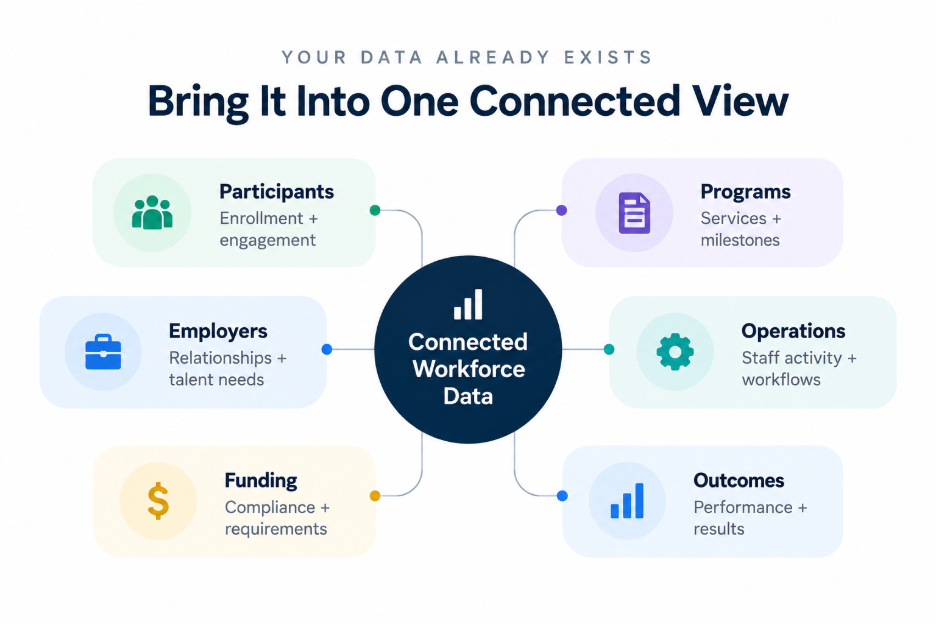
Integrations and shared data models can help information move between systems while preserving existing technology investments.
Build a Data Foundation You Can Trust
Connecting systems is only part of the work. The information moving between them also needs to be accurate, consistent, and well understood.
Duplicate records, incomplete information, inconsistent definitions, or unclear ownership can make reporting harder to trust and limit the value of dashboards, automation, and AI.
A stronger workforce data foundation includes:
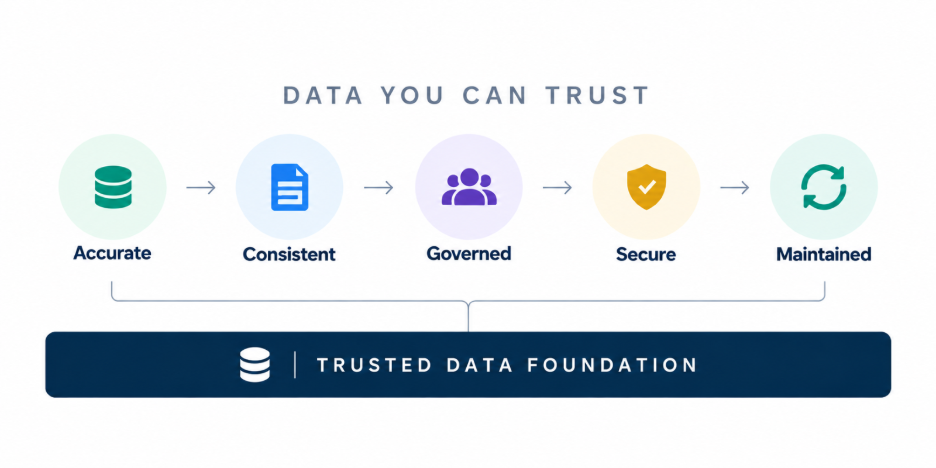
For example, terms such as enrollment, active participation, completion, placement, and successful outcome should mean the same thing across teams.
Shared definitions help ensure reports are interpreted consistently and that leaders are making decisions from the same information.
Strengthening data quality at this stage supports everything that follows, including reporting, Power BI dashboards, automation, and future AI initiatives.
Make Reporting Easier to Use
For many workforce teams, reporting still requires significant manual work.
Staff may pull information from multiple systems, combine spreadsheets, check figures, and recreate similar reports for leadership, funders, program teams, and partners.
A more connected reporting environment creates repeatable data flows and shared measures, reducing the time spent assembling reports and giving teams more time to understand what the information is showing.
Useful reporting should help answer questions such as:
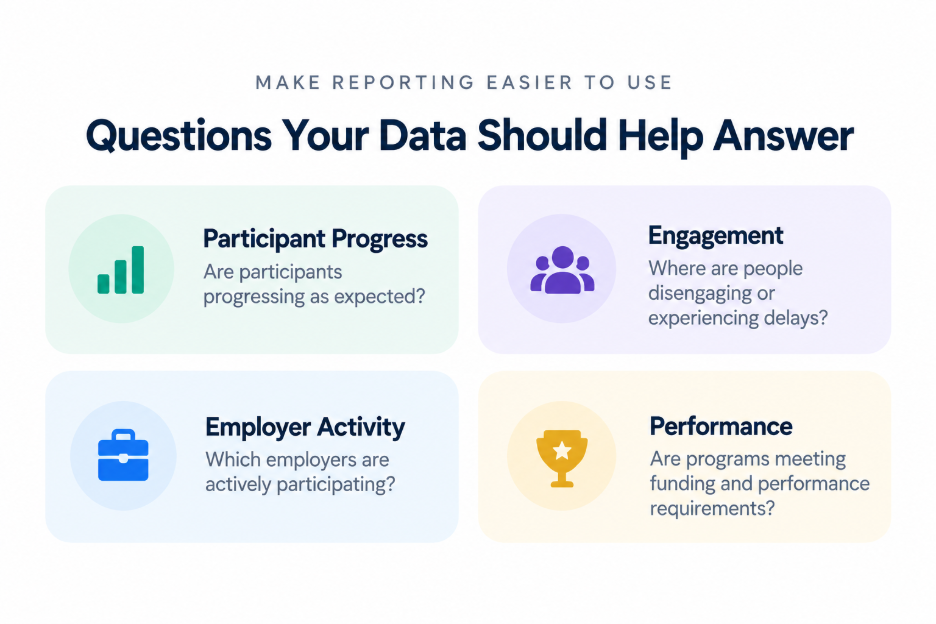
Starting with these questions helps determine which information matters, how it should be organized, and who needs access to it.
Give Each Team the Visibility It Needs
Connected data becomes more useful when people can access information at the level relevant to their role. Executive leaders may need an organization-wide view of performance, funding, capacity, and outcomes.
Program managers may need deeper visibility into enrollment, participation, service delivery, employer engagement, and completion. Frontline teams may benefit from information related to participant milestones, follow-up needs, and outstanding tasks.
Tools such as Microsoft Power BI can bring information from multiple sources into dashboards designed around these different needs. The goal is to give each team clear, timely information that helps them understand performance and act.
Prepare for AI and What Comes Next
With connected, reliable data in place, workforce organizations are in a stronger position to evaluate practical AI opportunities.
AI could help staff search program guidance, summarize information, identify patterns across large data sets, or guide users toward relevant services and resources.
Over time, it may also support more personalized participant experiences and deeper insight into employer and workforce needs.
Each use case should begin with a clear problem, appropriate human oversight, and an understanding of how the information will be used.
A strong data foundation gives organizations more flexibility to evaluate these opportunities responsibly as technology evolves.
Build a Stronger Workforce Data Foundation
Better workforce decisions depend on information teams can access, understand, and trust.
For many organizations, the opportunity begins with the systems already in place, connecting data, improving quality, establishing consistent measures, and creating clearer reporting and dashboards.
Those improvements can deliver value today while creating a stronger foundation for future technology investments.
At fivestar*, we help workforce organizations connect systems, strengthen data foundations, improve reporting, and build dashboards that give teams clearer visibility into their programs and outcomes.
Talk With Us About Your Workforce Data →


